

FAQ
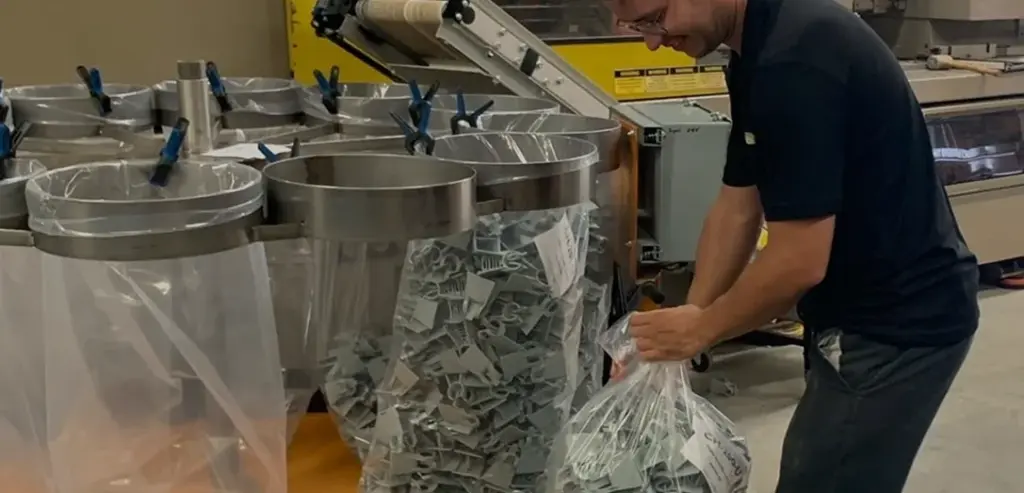
- Effective protection Prevent concrete from flowing into pipes while work is in progress.
- Versatile compatibility Available for three inner pipe diameters – 0.75″, 4″ and 4.5″.
- Quick to use Simple installation, ideal for high-yield sites.
- Economical format Available in large-capacity bags (up to 1,000 units).
- Robustness: strong enough to lift very heavy items.
- Compatibility: fit perfectly into prefabrication processes.
- Safety: enable safer handling on construction sites.
- Protection: once covered with cement, they offer reliable mechanical resistance.
- Installation takes place in the concrete mold before pouring.
- Specially designed tools can be used for quick, accurate, and secure installation.
- It encapsulates the ends of the reinforcing bars, providing protection against corrosion.
- It allows for precise and stable positioning of the vertical reinforcement.
- It is easy to install and suitable for prefabricated reinforcement cages.
- Quick and safe installation.
- Prevents movement during concrete pouring.
- Reduces defects such as voids or linear cracks.
- Robust and economical product.
- 2000 series: designed for bars from 0.34 in to 4.75 in.
- 3000 series: compatible with bars from 0.24 in to 0.31 in.
- The spacers cover different overlap levels, ranging from 0.71 in to 1.97 in.
- Precast concrete pipes.
- Manholes for sewer or storm water networks.
- Other cylindrical structures requiring precise positioning of the reinforcement.
- They ensure the necessary spacing between the reinforcement and the surface of the formwork.
- They ensure uniform concrete coverage that complies with standards.
- They prevent any movement of the reinforcement cage during manufacture.
- Classic: 6 to 25 mm
- MESH: 4 to 10 mm
- Classic: up to 3 inches
- MESH: up to 1.25 inches
- Classic: solid, heavier roller for greater stability
- MESH: star-shaped, openwork and lightweight for rapid serial use
- Classic: 500 to 600 units
- MESH: up to 5,000 units, making it very cost-effective
- Lightweight and economical, perfect for high-volume projects
- Easy to install and distribute on site
- Ideal for small-diameter reinforcement bars
- Open design promotes optimal concrete flow
- Horizontal bars: up to 20 mm in diameter (15-20 mm for the 35X25 CL20 model)
- Vertical bars: up to 10 mm in diameter for all models.
Can they be used for other types of pipe?
Caps
Can they be used for other types of pipe?
They are specifically designed for BNQ and PVC standards, but may be compatible with other pipes of equivalent dimensions.
Caps
What are the advantages of these caps?
Caps
What are the advantages of these caps?
What are Plasti-Tom closures used for?
Caps
What are Plasti-Tom closures used for?
Plugs are designed to protect the inside of BNQ or PVC pipes from concrete infiltration during pouring. They provide a secure seal, preventing obstructions or contamination of the system.
What are they made of?
Bubble Pads
What are they made of?
They are made of high-density plastic, ensuring sturdiness and absence of marks on surfaces.
Sont-ils adaptés au béton frais?
Bubble Pads
Sont-ils adaptés au béton frais?
No, they are intended for parts that have already been manufactured and are used during storage or handling.
What are Plasti-Tom protective pads used for?
Bubble Pads
What are Plasti-Tom protective pads used for?
The pads protect concrete parts during storage or packaging, preventing marks caused by contact with wood or concrete.
Are they resistant?
Panel ID
Are they resistant?
Yes, made of sturdy plastic to withstand construction site conditions and handling.
Why use a Panel ID?
Panel ID
Why use a Panel ID?
To improve traceability, reduce delivery errors, and facilitate parts logistics management.
Are they customizable?
Panel ID
Are they customizable?
The image does not mention customization, but usually these signs can include a code, logo, or name.
How are they attached?
Panel ID
How are they attached?
They are designed with feet that are inserted directly into the fresh concrete during pouring.
What is the function of ID Panels?
Panel ID
What is the function of ID Panels?
These signs are used to clearly identify precast concrete parts at the factory to avoid errors on the construction site.
Can it be used with other products?
Nitrile rubber hammer
Can it be used with other products?
It is optimized for use with Plasti-Tom plastic ladders, but can also be used with other delicate installations thanks to its flexible head.
What makes Plasti-Tom's installation hammer unique?
Nitrile rubber hammer
What makes Plasti-Tom's installation hammer unique?
Its “anti-rebound” property facilitates repetitive work, particularly during large-scale installations, while reducing user fatigue.
What is this hammer used for?
Nitrile rubber hammer
What is this hammer used for?
This nitrile hammer is specifically designed to install ladder rungs in concrete without damaging them.
Is this product economical?
Step
Is this product economical?
Yes, it stands out for its very competitive price, while offering lasting quality. Request a quote now!
What are the logistical advantages of the Plasti-Tom level?
Step
What are the logistical advantages of the Plasti-Tom level?
It is lightweight and easy to transport, reducing handling and transportation costs.
Are Plasti-Tom ladders certified?
Step
Are Plasti-Tom ladders certified?
Yes, the ladder is certified according to current standards, which guarantees its safe use in infrastructure projects.
What are its advantages in terms of security?
Step
What are its advantages in terms of security?
It has a non-slip surface, ensuring safe ascent and descent into manholes. Its bright color also improves visibility on construction sites.
What does Plasti-Tom's certified level consist of?
Step
What does Plasti-Tom's certified level consist of?
The ladder is made entirely of plastic composite, with no metal parts, giving it optimal corrosion resistance.
What products does it work with?
Installation tool
What products does it work with?
It is designed for use with single and double lifting inserts from the Plasti-Tom range, including the NEL-D series.
What is its load capacity?
Lifting tool
What is its load capacity?
The lifting shackles are certified to support up to 2,000 lb.
What is the role of the lifting tool?
Lifting tool
What is the role of the lifting tool?
It allows for the safe handling of precast concrete elements, particularly manhole pipes.
How does it work?
Installation tool
How does it work?
The tool is made of flexible resin. When screwed in, the resin expands inside the insert, holding it securely in place and preventing concrete from seeping in.
What is the Plasti-Tom installation tool used for?
Installation tool
What is the Plasti-Tom installation tool used for?
It enables the efficient installation of single and double lifting inserts in concrete molds.
What are the main materials used?
Lifting insert
What are the main materials used?
The inserts are made of high-strength plastic, capable of withstanding the mechanical stresses of lifting once the concrete has been poured.
Are there different sizes or models?
Lifting insert
Are there different sizes or models?
Yes, several models are available in various heights, ranging from 2.5 inches (63 mm) to 4.5 inches (113 mm). The models “S,” “RL,” “RS,” or “B” may indicate specific variants (reinforced, extended, or dual-purpose).
What are the advantages of these insertions?
Lifting insert
What are the advantages of these insertions?
How are lifting inserts installed?
Lifting insert
How are lifting inserts installed?
Where are these products used?
Lifting insert
Where are these products used?
They are mainly used in the manufacture of precast concrete products, such as pipes or manholes, where it is necessary to lift the parts using a hook or specialized lifting tool.
What are lifting inserts used for?
Lifting insert
What are lifting inserts used for?
Lifting inserts are designed to create cavities in precast concrete elements. These cavities serve as anchor points for lifting tools, facilitating the handling of heavy concrete parts on construction sites.
Can it be used for any type of environment?
Support vertical
Can it be used for any type of environment?
Yes, its robust plastic structure and corrosion protection make it ideal for demanding environments.
What are the advantages of vertical support?
Support vertical
What are the advantages of vertical support?
What is the Plasti-Tom vertical support used for?
Support vertical
What is the Plasti-Tom vertical support used for?
It is designed to support and vertically space steel reinforcement at the base of reinforcement cages in a simple and economical manner.
What are the advantages of this product?
Lattice spacer
What are the advantages of this product?
How often should spacers be placed?
Lattice spacer
How often should spacers be placed?
It is recommended to place a spacer every 12 to 18 inches (30 to 45 cm) around the top and bottom of the reinforcing cage to maintain stable positioning.
What bar diameters are compatible?
Lattice spacer
What bar diameters are compatible?
What are the typical applications?
Lattice spacer
What are the typical applications?
What are lattice spacers used for in concrete pipes?
Lattice spacer
What are lattice spacers used for in concrete pipes?
Lattice spacers are designed to hold reinforcement bars in the optimal position inside concrete pipes, whether for manholes or small to medium diameter conduits.
What types of covers are available?
Spacer hook
What types of covers are available?
Spacer hooks are available with different overlaps: 1 in. (25 mm), 1.25 in. (32 mm), 1.5 in. (38 mm), 1.75 in. (46 mm), and 2 in. (52 mm), allowing them to meet a variety of project requirements.
What is the advantage of this product compared to other methods?
Spacer hook
What is the advantage of this product compared to other methods?
The spacer hook is a quick, precise, and safe solution. Unlike other improvised supports, it is specifically designed for precast concrete, ensuring reliable positioning without altering the mold or requiring complex adjustments.
How should the hooks be positioned?
Spacer hook
How should the hooks be positioned?
For optimal efficiency, it is recommended to place a spacer hook every 12 to 18 inches around the top and bottom of the reinforcement cage. This ensures even spacing and prevents any movement of the reinforcement during manufacturing.
What types of trellises is it suitable for?
Spacer hook
What types of trellises is it suitable for?
Our spacer hooks are designed specifically for wire mesh with a diameter of 6 mm to 8 mm, which are the standard dimensions in most prefabrication applications.
What is a spacer hook used for?
Spacer hook
What is a spacer hook used for?
The spacer hook is used to precisely position reinforcing mesh in concrete molds. It holds the reinforcement in place, ensuring proper concrete coverage and preventing movement during pouring.
What is the difference between the classic circular chair and the MESH chair?
Circular Chairs, Circular Chairs (MESH)
What is the difference between the classic circular chair and the MESH chair?
Usage:
The classic circular chair is designed for heavy structural applications (foundation walls, elevator shafts, support beams).
MESH is designed for lighter applications such as precasting and simple surfaces.
Reinforcement compatibility:
Coverage:
Design:
Quantity per bag:
What are the advantages of the MESH circular chair?
Circular Chairs (MESH)
What are the advantages of the MESH circular chair?
What is the circular chair (MESH) used for?
Circular Chairs (MESH)
What is the circular chair (MESH) used for?
The MESH circular chair is designed for vertical reinforcement, precasting, and various precast concrete applications. It holds the reinforcement in the correct position while ensuring uniform coverage.
What is the coverage height offered?
Circular Chairs
What is the coverage height offered?
The overlap varies between 25 mm and 33 mm, depending on the model. This allows for coverage of 1 to 3 inches.
Is this product suitable for exposed concrete?
Circular Chairs
Is this product suitable for exposed concrete?
Yes, their cutting-edge design is ideal for architectural applications where concrete is visible, as they facilitate optimal concrete flow and reduce the risk of linear cracks.
What are circular chairs used for?
Circular Chairs
What are circular chairs used for?
Circular chairs are used to ensure uniform coverage of vertical reinforcement in structures such as foundation walls, elevator shafts, and support beams.
Is this product suitable for all types of formwork?
Clip Chair
Is this product suitable for all types of formwork?
Yes. Thanks to their stability, dual compatibility (horizontal and vertical), and restraint system, Clip Chairs are ideal for most formwork jobs requiring precise reinforcement spacing.
What is the coverage range offered?
Clip Chair
What is the coverage range offered?
Depending on the model, horizontal overlap ranges from 1.5 in. (38 mm) to 3.5 in. (87.5 mm), and vertical overlap ranges from 0.5 in. (13 mm) to 2.5 in. (62.5 mm).
What are the compatible reinforcement diameters for this product?
Clip Chair
What are the compatible reinforcement diameters for this product?
Clip chairs can accommodate:
What is the main function of clip chairs?
Clip Chair
What is the main function of clip chairs?
Clip chairs are used to support horizontal (up to 20 mm) and vertical (up to 10 mm) reinforcing bars in concrete work, ensuring adequate coverage and optimal stability during concrete pouring.
How does this chair contribute to the quality of the concrete?
Universal Clip Chair
How does this chair contribute to the quality of the concrete?
Its design ensures uniform coverage and optimal flow of concrete, thereby limiting the risk of voids and linear cracks in structures.
What advantages does this chair offer in terms of inventory management?
Universal Clip Chair
What advantages does this chair offer in terms of inventory management?
Thanks to its high flexibility (same chairs for multiple diameters), it reduces the number of models required, simplifying inventory management.
What types of projects is this chair recommended for?
Universal Clip Chair
What types of projects is this chair recommended for?
It is ideal for heavy-duty work on formwork, foundations, support structures, and prefabricated elements such as lamp post bases and slabs.
What is the range of frame diameters compatible with this chair?
Universal Clip Chair
What is the range of frame diameters compatible with this chair?
All chair sizes can accommodate steel bars with diameters ranging from 8 mm to 30 mm on a single chair.
What is the main function of the universal clip chair?
Universal Clip Chair
What is the main function of the universal clip chair?
The universal clip chair is designed to effectively support horizontal and vertical reinforcing bars, ensuring uniform concrete coverage in elements such as foundation walls, elevator shafts, and beams.
What are the advantages of Speedies® in terms of installation?
Speedies®
What are the advantages of Speedies® in terms of installation?
Speedies® save up to 95% of installation time compared to traditional shims. When used with the installation tool (stick), they can be placed without bending over or kneeling.
Are Speedies® resistant to sinking into the ground?
Speedies®
Are Speedies® resistant to sinking into the ground?
Yes. Thanks to their wide base and cup shape, they offer excellent weight distribution, preventing sinking even on soft surfaces.
How many Speedies® units are needed per square meter?
Speedies®
How many Speedies® units are needed per square meter?
For optimal results, it is recommended to use between 1.0 and 1.5 units per square meter.
What is the difference between Speedies® foundation and ceiling models?
Speedies®
What is the difference between Speedies® foundation and ceiling models?
The “Speedies for foundations” models (SPD-25 to SPD-70) are suitable for use on the ground, while the “Speedies for ceilings” models (SPD-25P and SPD-40P) are designed for inverted positioning, ensuring reliable installation on ceilings.
What are Speedies® used for?
Speedies®
What are Speedies® used for?
Speedies® are spacers for reinforcing mesh designed for foundation slabs or uneven surfaces. They ensure quick, stable, and uniform installation of the mesh on site.
Ces espaceurs conviennent-ils à d’autres types de coffrages ?
Spacer for piles
Ces espaceurs conviennent-ils à d’autres types de coffrages ?
Oui, bien qu’ils soient spécialement adaptés aux pieux forés, ils conviennent aussi à d’autres types de coffrages nécessitant un positionnement précis des cages d’armature.
What material are the spacers made of?
Spacer for piles
What material are the spacers made of?
They are made of high-density plastic, offering superior strength and excellent durability, even for bored pile applications.
What are pile spacers used for?
Spacer for piles
What are pile spacers used for?
They enable the lateral positioning and centering of reinforcement cages in column, elevator, and bored pile formwork. They ensure proper spacing during installation and concrete pouring.
Is the Carnie Cap reusable?
Carnie Cap
Is the Carnie Cap reusable?
Yes, the Carnie Cap is made of durable plastic, making it reusable and economical in the long term on multiple construction sites.
What is the impact resistance of the Carnie Cap?
Carnie Cap
What is the impact resistance of the Carnie Cap?
The Carnie Cap can withstand a 250 lb load dropped from a height of 7.5 feet, providing excellent impact protection.
How often should I install Carnie Caps on my rebar?
Carnie Cap
How often should I install Carnie Caps on my rebar?
Simply install two units per 8-foot board, providing secure coverage while minimizing material requirements.
What is the main function of the Carnie Cap?
Carnie Cap
What is the main function of the Carnie Cap?
The Carnie Cap is designed to cover exposed ends of rebar to prevent impalement injuries on construction sites.
Does this product leave marks on concrete?
Base
Does this product leave marks on concrete?
No, the bases are designed to minimize marks during formwork removal while ensuring uniform distribution of the concrete.
What types of heights are the bases available in?
Base
What types of heights are the bases available in?
The bases are available in five different heights ranging from 0.75 in. (19 mm) to 4 in. (102 mm), with models combining two heights on the same piece for added flexibility.
Why use this product instead of traditional bricks?
Base
Why use this product instead of traditional bricks?
Sand plates are lighter than bricks, do not crumble, and facilitate the flow of concrete, thereby reducing the risk of cracks or voids.
What are Plasti-Tom sand plates used for?
Base
What are Plasti-Tom sand plates used for?
The bases are designed to replace bricks on floor slabs and foundation footings, providing a lighter, stronger, and more uniform alternative for supporting reinforcements.
Can they be used with other Plasti-Tom products?
Metal Chair
Can they be used with other Plasti-Tom products?
Absolutely. They are often combined with Slab Bolsters to support multiple levels of reinforcement in upper slabs.
Do these chairs leave marks after removal?
Metal Chair
Do these chairs leave marks after removal?
No. The legs are made of HDPE, a durable plastic that does not rust, degrade, or leave marks on concrete.
Are they compatible with all types of frames?
Metal Chair
Are they compatible with all types of frames?
Yes, they are compatible with all sizes of reinforcing bars and wire mesh, making them versatile and practical on construction sites.
What heights are available for these chairs?
Metal Chair
What heights are available for these chairs?
They are available in heights ranging from 4 to 16 inches, in 0.5-inch increments, allowing for high precision in the positioning of the reinforcement.
What are metal chairs used for in construction work?
Metal Chair
What are metal chairs used for in construction work?
Metal chairs are used to support horizontal reinforcement in upper slabs. They ensure the stability of steel bars during concrete pouring.
What is the advantage of the shape of the towers?
Tour
What is the advantage of the shape of the towers?
Their unique shape facilitates precise positioning between reinforcements, contributing to optimal concrete flow and preventing voids or linear cracks in structures.
Do the towers leave marks on the concrete after formwork removal?
Tour
Do the towers leave marks on the concrete after formwork removal?
No. The feet at the base of the towers are specially designed to leave no marks on the concrete during formwork removal, even with exposed concrete.
Can the towers be used with slab bolsters?
Slab Bolster, Tour
Can the towers be used with slab bolsters?
Yes, towers are frequently used in combination with slab bolsters. They support the second or third row of reinforcement on the upper slabs for more precise positioning.
What heights are covered by the Tour models?
Tour
What heights are covered by the Tour models?
Tour models cover a range of heights from 3 to 12.5 inches (76 to 318 mm), offering optimal versatility to support frames at different levels, depending on the model selected.
How many pieces are there in a bag and on a pallet?
Slab Bolster
How many pieces are there in a bag and on a pallet?
Depending on the height chosen, a bag contains 72 or 96 pieces, and a pallet can hold between 3,024 and 7,392 pieces.
What material are Slab Bolsters made of?
Slab Bolster
What material are Slab Bolsters made of?
They are made of durable polyethylene, a long-lasting material that ensures a long service life on construction sites.
What are Slab Bolsters used for in formwork?
Slab Bolster
What are Slab Bolsters used for in formwork?
Slab Bolsters effectively support reinforcement bars or mesh over large areas, ensuring uniform coverage and facilitating the installation of steel bars.
Où envoyer ma demande d’échange?
Exchanges and returns
Où envoyer ma demande d’échange?
À info@plastitom.com, avec facture et photos si nécessaire, vous pouvez aussi utiliser le formulaire de la page de contact.
Do I have to pay for the exchange?
Exchanges and returns
Do I have to pay for the exchange?
Yes, the customer is responsible for the shipping costs for exchanges.
What are the deadlines for an exchange?
Exchanges and returns
What are the deadlines for an exchange?
The deadline for an exchange is 30 days for a new product and 60 days for a defective product.
Can I return a product?
Exchanges and returns
Can I return a product?
Unfortunately, no returns are accepted, only exchanges in certain cases.
Can I place an order without an account?
Exchanges and returns
Can I place an order without an account?
Yes, if the amount is less than $1,000 (payment by card with a 3.3% fee).
How can I track my order?
Orders and delivery
How can I track my order?
A tracking number may be provided depending on the shipping company chosen, or you can write to info@plastitom.com.
Which carriers do you use?
Orders and delivery
Which carriers do you use?
Partners specialized by product type, volume, and weight.
Do you ship to the United States?
Orders and delivery
Do you ship to the United States?
Yes, throughout the United States depending on the region (confirmation upon ordering).
Do you offer free shipping?
Orders and delivery
Do you offer free shipping?
Yes, for orders of 8 pallets or more anywhere in Quebec.
What are the delivery times in Quebec?
Orders and delivery
What are the delivery times in Quebec?
Between 24 and 48 business hours after processing. See the shipping and delivery page for more information.
Submit my question
Formulaire de FAQ
"*" indicates required fields